
Preferences
Privacy is important to us, so you have the ability to disable certain types of storage that may not be necessary for basic website operation. Blocking categories may affect your experience on the Web site. Learn more.


Privacy is important to us, so you have the ability to disable certain types of storage that may not be necessary for basic website operation. Blocking categories may affect your experience on the Web site. Learn more.
Climate pressures, nitrogen regulations, and global competition on both quality and price. The Dutch food and agriculture sector is strong, but the bar keeps getting higher. LMI works with growers, processors, and distributors to develop leaner processes that ensure quality and protect margins. Proven through more than 20 years of practical experience in the sector. See how LMI helps food and agriculture companies →
Already slim margins are being further squeezed by rising raw material prices, energy costs, and logistical disruptions. Customers are demanding greater flexibility, more product variations, and shorter lead times, while the expiration date remains unchanged. Nitrogen regulations, sustainability goals, and increasing food safety requirements are adding pressure from another direction. Meanwhile, qualified staff are scarce and turnover is high.
In the food and agriculture sector, every gram of waste counts twice: as a cost and as lost revenue. In this sector, Lean therefore not just a management trend but an absolute necessity. For more than 20 years, LMI has been working with growers, processors, bakeries, and distributors to develop processes that ensure quality, improve yield, and protect margins—from the field to the shelf.
The challenges that food and agribusinesses bring to us are unique. How do we reduce waste on the production line without compromising speed or quality? How do we improve our yield—the percentage of high-quality products leaving the line—while raw material costs rise? How do we launch more new products without each introduction destabilizing the line? How do we set up a new production line or an entirely new factory so that it functions properly from day one instead of spending months dealing with teething problems?
And then there are the strategic questions: How do we double our sales over the next ten years, given that our current processes cannot handle that volume? How do we reduce our environmental footprint if that is also an operational improvement issue, not just a communications issue? How do we build an organization that continues to improve itself, even when the issues of the day—seasonal peaks, downtime, quality reports—demand all our attention?
The food and agriculture sector faces a number of challenges that fundamentally distinguish it from other industries. The combination of perishable products, tight delivery schedules, strict hygiene requirements, and seasonal fluctuations in demand makes waste particularly costly in this sector. An extra day of processing time on the line means a shorter shelf life for the consumer. A quality deviation in a batch can result in a full product recall. And a poorly designed New Product Introduction process means that every new variant disrupts the existing line.
In this context, Lean structure: it highlights where value is lost in the production flow, which steps do not contribute to quality or speed, and how teams can focus on the right KPIs on a daily basis. Not as a one-time project, but as a way of working that sticks, even after the season ends and staff changes occur.
The food and agricultural companies LMI works with request a variety of support services. Sometimes this involves targeted Kaizen events focused on a specific product family or line, such as at Bakker Barendrecht and Tuinderij Vers, where teams achieve concrete results in quality, speed, or waste reduction during a structured improvement week. Other times, it involves a broader training program in which employees are trained to become Orange Belt, Green Belt Black Belt certified, as at Koninklijke Vezet and Tuinderij Vers.
At Borgesius, the collaboration goes a step further: in addition to Green and Black Belt and Lean training, a Daily Management System was also implemented—a daily improvement framework that enables teams to systematically address deviations and drive improvements, from the production floor all the way up to management. That is the difference between Lean a project and Lean a way of working.
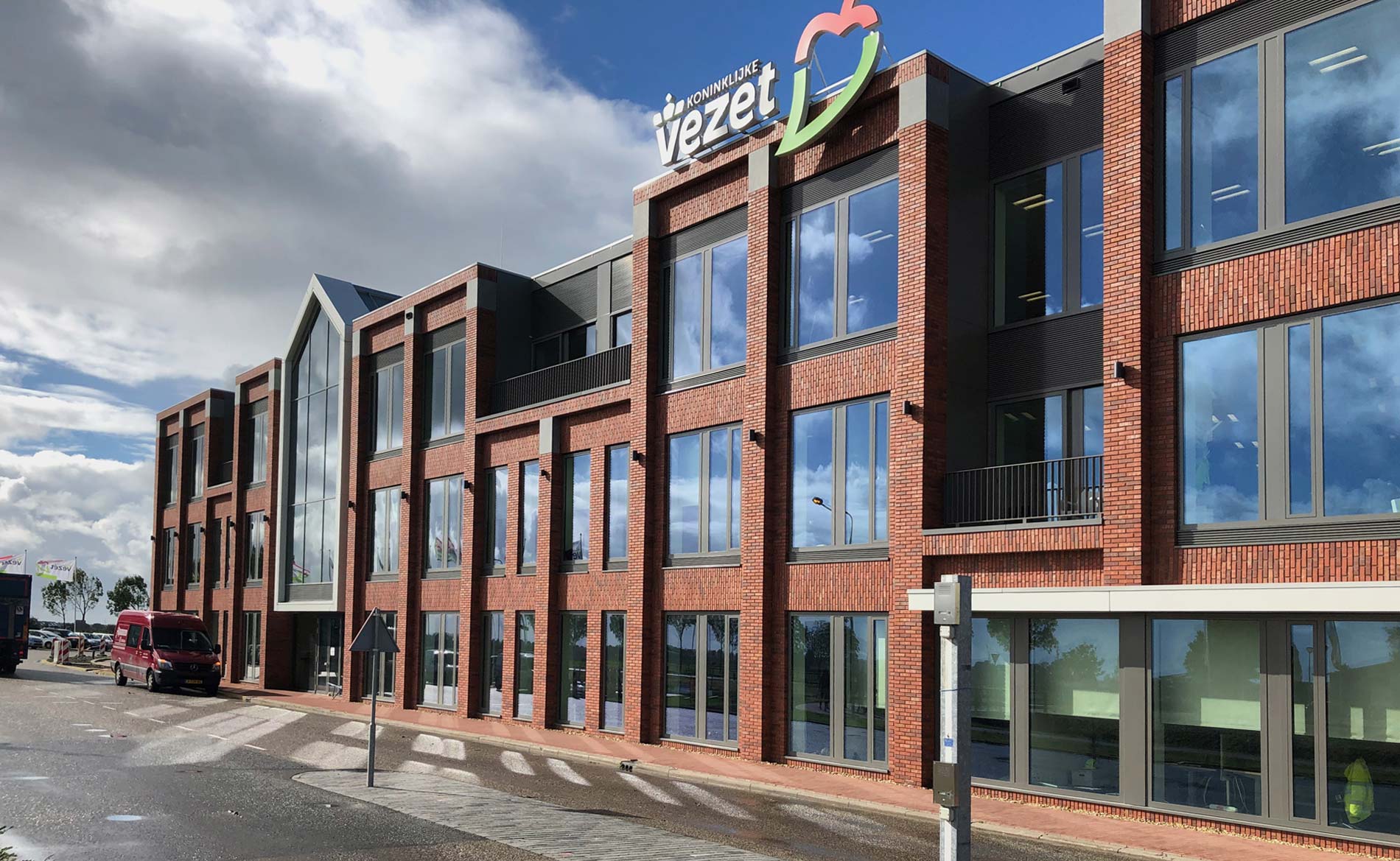
Koninklijke Vezet is another striking example. The Operations Director describes the collaboration as follows: LMI provided training, Kaizen events for product families, and practical assistance on the shop floor. In addition, the New Product Introduction process was overhauled, and new production lines were set up with LMI’s assistance. The result: improved quality, fewer defects in good products, and substantial cost savings.
For Royal Pride, Yellow and Green Belt were implemented to teach employees how to identify and address waste in their own processes.
Fresh Produce and Fruit & Vegetable
Infresh produce manufacturing, Lean is Lean linked to quality and shelf life. Shorter turnaround times on the production line mean fresher products for the customer. Less handling means less damage. A more streamlined NPI (New Product Introduction) process means that new variants cause less disruption to existing lines. Koninklijke Vezet and Tuinderij Vers are examples of companies where LMI achieved concrete results in this area.
Bakery and Grain Processing
Inbakeries, Lean the challenges of continuous production, frequent product changes, and tight profit margins per unit. Kaizen events on specific production lines, Daily Management Systems, and Lean training help teams manage operations on a daily basis and drive structural improvements. Borgesius and Bakker Barendrecht are examples from this sector.
Agricultural businesses and growers
Lean alsoprovides Lean in primary production, such as greenhouse horticulture, arable farming, and livestock farming. Process optimization during harvesting, logistics related to marketing, and the establishment of internal improvement structures are applications that add value in an agricultural context as well.
Ingredients, Dairy, and Beverages
Inthe processing of dairy, ingredients, and beverages, the primary Lean include improving OEE, optimizing yield, and reducing cleaning and changeover times. FrieslandCampina, Vreugdenhil, Refresco, and United Coffee Company are examples of companies in this segment with which LMI has collaborated.
New Factories and Production Lines
In the food industry, anew factory or production line offers the ideal opportunity to Lean before habits and workarounds become ingrained. LMI supports food companies with process design, line layout, and employee training, ensuring that the new line or factory operates at full capacity from day one. Koninklijke Vezet is an example of a project where LMI provided full support throughout this process.
In the food and agriculture sectors, the results of Lean are Lean visible in the key metrics that matter: less waste per ton of raw material processed, higher OEE on production lines, shorter changeover times when switching product variants, fewer quality reports, and an NPI process that runs faster and more reliably. But also within the organization itself: employees who know how to identify and address deviations, a manager who focuses on the right KPIs every day, and a culture of improvement that doesn’t depend on a single driving force.
In an industry where margins are tight and every pound counts, this isn’t just a minor detail—it’s the difference between a business that collapses at the first sign of growth and one that scales up without breaking.
"LMI is helping us with our transformation to provide Albert Heijn customers with fresh cut vegetables, fruit, meal salads, and fresh pizzas. They provide training, improvement programs for our product families, and practical assistance on the shop floor. They have also helped us with our New Product Introduction process and with setting up new production lines. Quality has improved, we’re discarding fewer good products, and we’re saving significantly on costs.” — Gertjan van Potten, Operations Director at Koninklijke Vezet
LMI offers in-house Lean at all levels, specifically tailored to the food and agriculture sector: from Kaizen workshops for production teams to Green Belt Black Belt for process improvement specialists and managers. All courses can be conducted at your own facility or on-site, using real-world case studies from the day-to-day operations of food production.
For broader challenges, such as setting up a Daily Management System, establishing a new production line, or guiding a cross-departmental Lean, our consultants work hands-on on the shop floor. Our director, René Aernoudts, would be happy to discuss your specific situation with you, with no obligation.
Our director René is happy to brainstorm with you, with no strings attached. With over 30 years of Lean , there are few situations for which he cannot find a solution.
Some of our clients within the
Lean the food and agriculture sector
industry



Our training courses can also be provided in-company. Feel free to call us if you would like to spar or get advice on your (customized) training issue. We are happy to think along with you!
View our courses
There are many different organizational issues where Lean can help. We have extensive experience in advisory and consultancy issues in the implementation of a Lean process. We use methods such as Strategy Deployment, A3, Gemba Walking, Kaizen, Problem Solving, Coaching On The Job and Training Within Industry. In doing so, we achieve great results and engagement with our clients at all levels of the organization. Let us help with your issue!
LMI helps us in our transformation to provide Albert Heijn customers with fresh cut vegetables, fruits, meal salads and fresh pizzas. They provide training, improvement processes (Kaizens) on our product families and practical help on the shop floor. But they have also helped us in our New Product Introduction process, and in setting up new production lines. This has already brought us many benefits: quality has improved, we throw away less good products, and so we also save a lot in our costs. I am happy with the help from the team at LMI: they are hands-on, flexible and help us make really good successes.
Gertjan van Potten
Operations Director Royal Vezet


.png)
.png)
.jpg)


